


18 June 2026 — News, Press Releases, Projects
ECOSTEP launches to shape the future of sustainable footwear in Europe
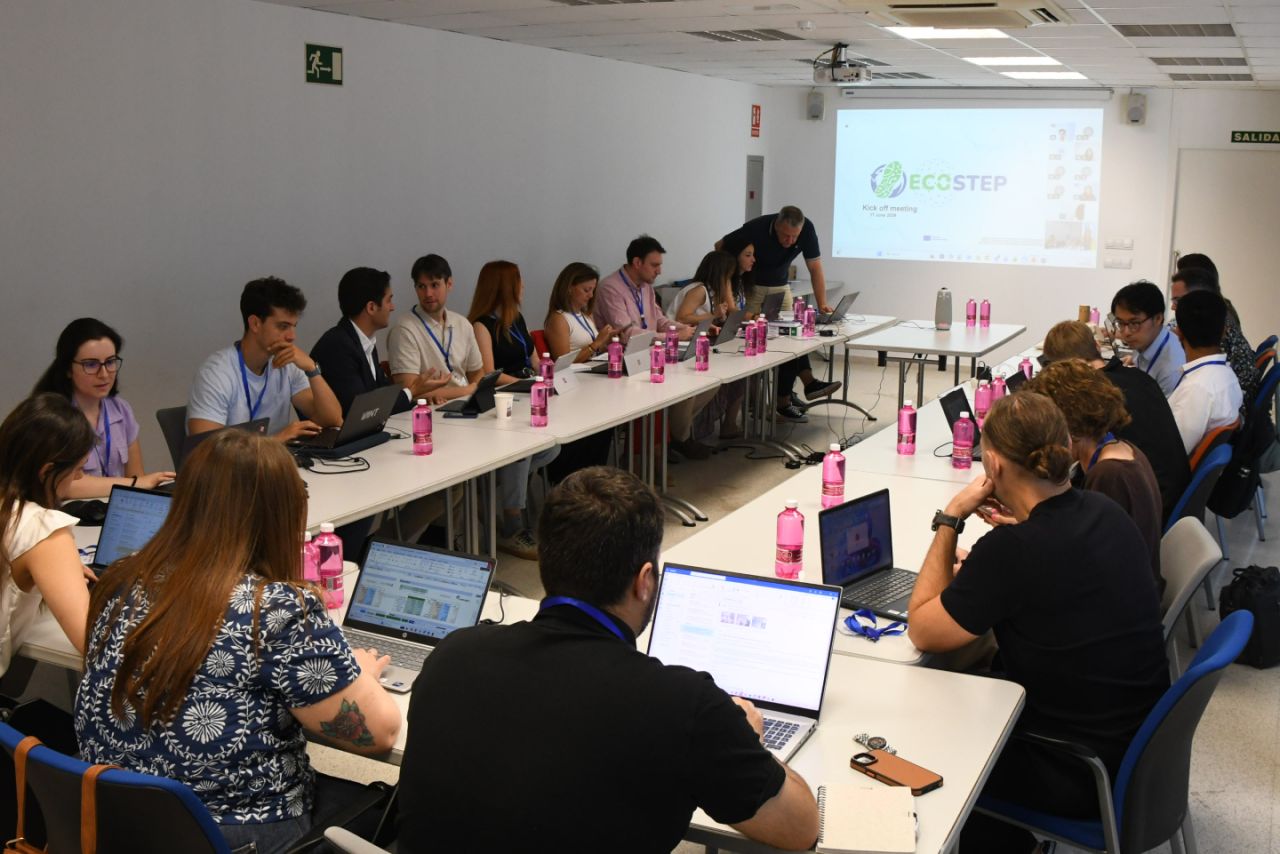
A Horizon Europe project brings together industry leaders, researchers and sustainability experts to create the first comprehensive ecodesign framework tailored to the footwear sector.
The European footwear sector has taken an important step towards its sustainable transition with the official launch of ECOSTEP – Ecodesign criteria for Sustainability in footwear and Testing methods for Evaluation of Performance, a four-year Horizon Europe project that aims to establish a common framework for designing, assessing and validating more sustainable footwear products.
The project, led by CETEC, a Spanish Plastic and Footwear Technology Centre, was officially launched on 17th of June in Alhama de Murcia, bringing together partners from Belgium, Bulgaria, Czech Republic, Germany, Portugal and Spain.
The timing could not be more critical.
The footwear industry is facing unprecedented environmental and regulatory challenges. Billions of pairs of shoes are produced globally every year, generating significant impacts in terms of greenhouse gas emissions, resource consumption, waste generation and chemical use. At the same time, the European policy landscape is evolving rapidly, requiring companies to rethink how products are designed, manufactured and communicated to consumers.
Yet despite the urgency of this transition, the footwear sector still lacks a common understanding of what sustainable footwear should look like in practice.
How should durability be measured? What makes a shoe repairable or recyclable? Which indicators best reflect circularity? How can sustainability claims be substantiated and communicated with confidence?
These are the questions ECOSTEP seeks to answer.
“Europe’s footwear industry recognises that sustainability can no longer be addressed through isolated initiatives or abstract ambitions. We need a common language, robust methodologies and practical tools that reflect the realities of our products and value chains. Through ECOSTEP, the sector is bringing together manufacturers, researchers, consumer representatives and sustainability experts to collectively define what sustainable footwear should mean in practice and how it can be credibly demonstrated. This collaborative approach is essential to ensure that the transition towards circularity strengthens both environmental performance and the competitiveness of European footwear”, explained Carmen Arias, Secretary General of the European Footwear Confederation (CEC), also partner in the project.
Over the next four years, ECOSTEP will develop the first comprehensive ecodesign framework specifically tailored to the footwear sector. Combining scientific rigour with practical applicability, the project will define clear criteria and testing methodologies for key sustainability parameters, including durability, repairability, recyclability, chemical safety and circularity.
The project will also deliver a digital platform integrating Artificial Intelligence, Life Cycle Assessment and Digital Product Passport functionalities to support companies in making informed design decisions, assessing compliance and improving transparency throughout the footwear value chain.
Furthermore, ECOSTEP recognises that sustainability cannot be achieved through technical solutions alone.
To ensure that its outputs are relevant, practical and widely adopted, the project will establish dedicated Working Groups involving footwear companies, material suppliers, consumer organisations, standardisation experts, policy actors, behavioural scientists and sustainability specialists. Their role will be to validate the project’s findings and help translate scientific knowledge into tools that businesses and consumers can use.
The project will deliver five key outcomes:
- A footwear-specific ecodesign framework defining sustainability criteria and associated testing methods;
- Standardised verification approaches to assess footwear performance against ecodesign requirements;
- An integrated digital platform supporting sustainability assessment, traceability and Digital Product Passports;
- Practical guidelines and business models promoting circular design, repair, reuse and recycling;
- Training and capacity-building programmes to support companies, particularly SMEs, in implementing ecodesign principles and preparing for future market requirements.
ECOSTEP ultimately aims to strengthen the competitiveness and resilience of the European footwear sector by equipping businesses with the knowledge, methodologies and tools needed to thrive in a circular economy.
As the sector moves from ambition to implementation, ECOSTEP represents a unique opportunity to build a shared pathway towards footwear that is not only innovative and desirable, but also demonstrably more sustainable.
About ECOSTEP
ECOSTEP (Ecodesign criteria for Sustainability in footwear and Testing methods for Evaluation of Performance) is funded by the European Union’s Horizon Europe Research and Innovation Programme and will run from June 2026 to May 2030.
Stay updated by following ECOSTEP on LinkedIn, BlueSky, and Youtube.